
Soundproofing Information & Solutions
Sound Deadening or Sound Absorbing?
To soundproof, or not to soundproof — that is the question. Whether 'tis nobler to block the noise entirely or absorb it into silence. Let us help you decide.
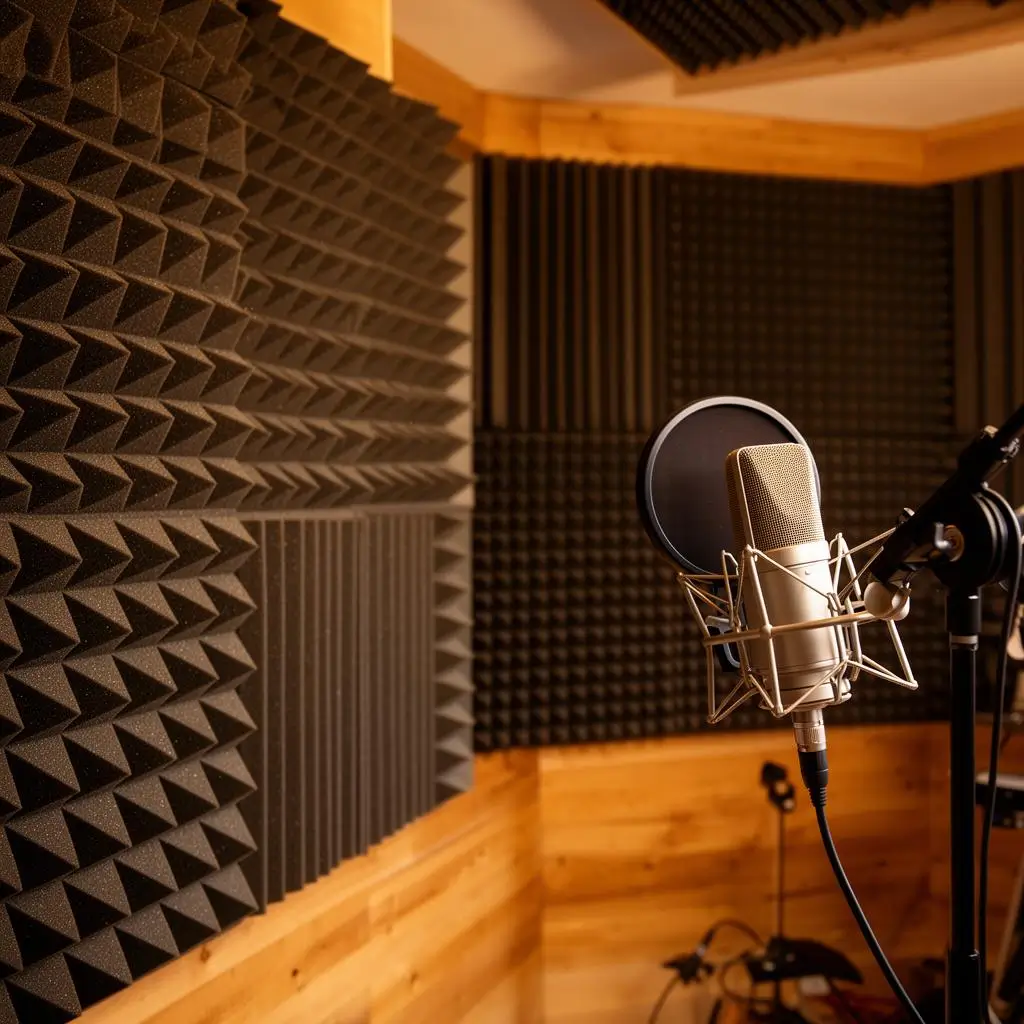
Understanding Sound Control
Most people use the term "soundproofing" as a catch-all, but there are actually two very different approaches to managing noise — and understanding the difference is key to getting the result you want.
Sound deadening focuses on blocking sound from passing through walls, floors, and ceilings. Think of it as building a dam — the goal is to stop sound from traveling from one space to another.
Sound absorbing, on the other hand, is about controlling how sound behaves within a room. It reduces echo, reverberation, and harshness, making the space more comfortable to be in.
Sound behaves like water.
It finds every crack, gap, and weak point. If there's a path, sound will take it — just like water flowing through the smallest opening.
The Two Approaches
Each method serves a fundamentally different purpose. Here's how they compare.
Sound Deadening

Blocks sound from traveling between spaces. Uses heavy, dense materials installed within walls, floors, and ceilings to create a barrier that sound cannot easily penetrate.
Heavy, dense materials (mass-loaded vinyl, drywall)
Measured by STC (Sound Transmission Class)
Installed inside walls and structures
Best for blocking external noise
Sound Absorbing
Controls how sound behaves within a room. Soft, porous materials on surfaces capture sound energy and reduce echo, reverberation, and overall noise levels inside the space.
Soft, porous materials (foam, fabric panels)
Measured by NRC (Noise Reduction Coefficient)
Applied to exposed surfaces
Best for improving room acoustics
When to Use Each Approach
The right solution depends on the problem you're trying to solve.
Sound Deadening Uses
Conference rooms — keep discussions private
Blocking neighbour noise through shared walls
Reducing traffic noise from outside
Creating a quiet home workspace
Sound Absorbing Uses
Apartments with echo and reverb issues
Auditoriums and lecture halls
Restaurants with excessive noise
Recording studios and podcasting rooms
Choosing the Right Product
Follow these two steps to identify exactly what you need.
01
Look for STC or TL ratings
If the product lists an STC (Sound Transmission Class) or TL (Transmission Loss) rating, it's designed for sound deadening.. These metrics measure how well a material blocks sound from passing through.
02
Look for NRC ratings
If the product lists an NRC (Noise Reduction Coefficient) rating, it's designed for sound absorbing. This measures how much sound energy a material can capture.
Expert Note
Having an understanding of these differences while deciding which soundproofing solutions is right for your project will help you avoid wasting time, effort and money on products that won’t serve your purpose. In many instances optimum results are best achieved by employing both sound deadening and sound absorbing products, in the right context. If undertaking an important or costly soundproofing project, we recommend consulting with an acoustic engineer.
For more information on Sound Deadening or Sound Absorbing products, simply email to info@soundproofingproducts.com.au and we will be only too happy to help.
Soundproofing Products Australia
Soundproofing Products Australia online store sells a wide range of thermal and acoustic insulation products. We also sell Mass Loaded Vinyl,Nuwrap Pipe Lagging Insulation,Polyester Insulation,Fibertex Rock-wool,Knauf Earthwool,Fletchers Pink Batts, andBradford Acoustic Batts.
If you have any questions or require a particular delivery quotation, don't hesitate to Contact Us! You can also get a free obligation quote. Check out other insulation supplies in Soundproofing Products Australia.
For additional information about the warranty, delivery, and returns. Like us on Facebook.